Facing criminal allegations in Fort Lauderdale is often an overwhelming experience, filled with uncertainty about what happens next. The Criminal Court Process in Broward County is a structured journey governed by the Florida Rules of Criminal Procedure and the specific administrative orders of the 17th Judicial Circuit.
Understanding this sequence is vital for anyone accused of a crime, as the decisions made at each stage can have lasting implications on the final resolution. From the moment of arrest at the Broward County Main Jail to a potential trial at the Central Courthouse, this guide provides a clear roadmap of the legal steps involved in a South Florida criminal case. Contact the Law Offices of R. David Williams, P.A. to discuss your case and protect your future.
Navigating the 17th Judicial Circuit Court requires a clear understanding of Florida's procedural requirements. Here are the essential takeaways for the Criminal Court Process in Broward County:
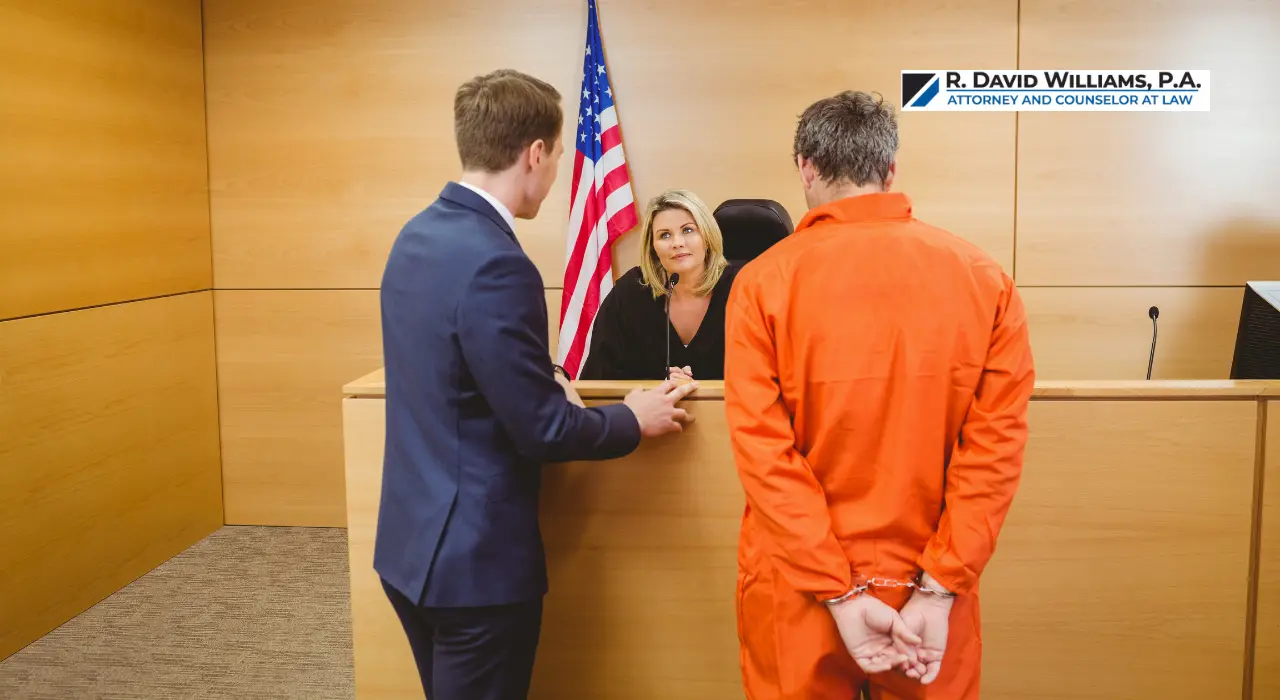
In Florida, the legal process typically begins with an arrest or the issuance of a "Notice to Appear." Under Florida Rule of Criminal Procedure 3.130, every person arrested must be brought before a judge for a first appearance within 24 hours.
It is a common misconception that an arrest automatically means you have been "charged." In Broward County, the decision to move forward lies solely with the State Attorney’s Office.
The prosecutor reviews the police evidence to decide whether to file a formal document called an Information (for most crimes) or seek an Indictment from a grand jury (required for capital offenses). If the state chooses not to file charges, the case may be "No Actioned," leading to a dismissal.
The Arraignment is the first formal court date after charges are filed. During this hearing in the 17th Judicial Circuit Court:
For those who have retained a seasoned legal advocate, a "Written Plea of Not Guilty" is often filed in advance. This frequently allows the defendant to waive their physical appearance at the arraignment, moving the case directly into the investigative phase.
The period between the arraignment and the trial is known as the Discovery phase. This is the "fact-finding" portion of the Criminal Court Process in Broward County.
A skilled attorney will often file motions to challenge the state's evidence. Common filings include Motions to Suppress, which seek to exclude evidence collected through an illegal search, or Motions to Dismiss, which argue that the undisputed facts do not constitute a crime under Florida law.
Not every case proceeds to a jury trial. In many instances, the Broward State Attorney’s Office and the defense engage in plea negotiations.
If a resolution is not reached, the case moves to a Trial. In Florida, most criminal trials are heard by a jury of six citizens (or twelve for capital cases).
The timeline for a case varies significantly based on the complexity of the charges. A misdemeanor may be resolved in a few months, while a complex felony could take a year or more. Under Florida's "Speedy Trial" rules, the state generally has 90 days for misdemeanors and 175 days for felonies to bring a case to trial, though these limits are often waived by the defense to allow for a more thorough investigation.
Missing a scheduled appearance in the 17th Judicial Circuit usually leads to the judge issuing a "Capias" or bench warrant for your arrest. Additionally, any bond previously posted may be forfeited. If you have a legitimate emergency, a skilled attorney can often file a motion to "quash" the warrant and reschedule the hearing, explaining the circumstances to the court to avoid further penalties.
Yes, the vast majority of cases in the Criminal Court Process in Broward County are resolved through plea agreements, dismissals, or diversion programs. A knowledgeable defense attorney will evaluate the evidence to determine if a trial is necessary or if a more favorable resolution can be achieved through negotiation with the Broward State Attorney’s Office, potentially avoiding the risks of a jury verdict.
In the 17th Judicial Circuit, these are pretrial hearings where the judge checks on the progress of the case. The judge will ask if discovery is complete and if the parties are ready for trial. These hearings are critical opportunities for your legal representative to update the court on defense investigations or to signal that a plea agreement is being finalized.
A plea of Nolo Contendere (No Contest) means you are not contesting the charges but are accepting the sentence. For most sentencing purposes in the Criminal Court Process in Broward County, it is treated similarly to a guilty plea. However, the primary benefit is that a "No Contest" plea generally cannot be used as an admission of guilt in a later civil lawsuit, which can be a vital distinction in certain cases.
The Criminal Court Process in Broward County is complex and moves quickly. Decisions made during a five-minute bond hearing or a pretrial conference can impact the rest of your life.
Having a knowledgeable legal representative who focuses on criminal defense in Fort Lauderdale ensures that your side of the story is heard. A dedicated advocate works to hold the state to its high burden of proof, seeking to mitigate the impact of an arrest on your future.
If you or a loved one is currently navigating the 17th Judicial Circuit, taking the first step to understand the process is vital for a strong defense.
I’m Fort Lauderdale criminal defense attorney R. David Williams. When you call the Law Offices of R. David Williams, P.A., you speak directly with me. I take the time to review the facts of your case, examine the evidence, explain how Florida’s aggravated battery laws may apply, and walk through your defense options clearly and directly.
Call (954) 522-9997 to schedule your free consultation, or use the confidential online form to reach me directly. Same-day responses are common, and after-hours support is available.
Knowledge | Experience | Integrity – R. David Williams
Copyright © 2026. Law Offices of R. David Williams, P.A. All rights reserved.
The information in this blog post (post) is provided for general informational purposes only and may not reflect the current law in your jurisdiction. No information in this post should be construed as legal advice from the individual author or the law firm, nor is it intended to be a substitute for legal counsel on any subject matter. No reader of this post should act or refrain from acting based on any information included in or accessible through this post without seeking the appropriate legal or other professional advice on the particular facts and circumstances at issue from a lawyer licensed in the recipient’s state, country, or other appropriate licensing jurisdiction.
Law Offices of R. David Williams, P.A.
15 Southwest 10th Street
Fort Lauderdale, FL 33315
(954) 522-9997
https://dwilliamslaw.com/
Call (954) 522-9997 or fill out the short form below. We will usually respond within 1 business day but often do so the same day. Don’t hesitate, your questions are welcome.
* Required Fields
After-hours support is Now Available!
We are thrilled to introduce our after-hours answering service, which ensures prompt response to all of your queries regardless of the time. Our dedication to your satisfaction extends beyond regular business hours. Please feel free to contact us anytime; we will be more than happy to assist you.


The information you obtain at this site is not, nor is it intended to be, legal advice. You should consult an attorney for advice regarding your individual situation. Contacting us does not create an attorney-client relationship.


