You're facing a drug possession charge in Fort Lauderdale. Maybe it came from a traffic stop, a search, or a situation that escalated faster than you anticipated. Whatever brought you here, the charge in front of you raises an immediate question: Is possession of drugs a felony in Florida, or does it depend on what was found?
It depends. The type of controlled substance, how Florida classifies it, and the facts of your case all determine whether you're looking at a misdemeanor or a felony possession offense. A felony charge carries prison time, steep fines, and consequences that follow you long after the case closes.
Not always. Under Florida drug possession laws, the severity of a drug possession charge depends largely on what type of illegal drug is involved and how it's classified under state law.
Marijuana is treated differently than other controlled substances. Possession of less than 20 grams of marijuana is typically charged as a first degree misdemeanor, which carries up to one year in jail. Possession of paraphernalia without drugs can fall to a second degree misdemeanor under certain circumstances.
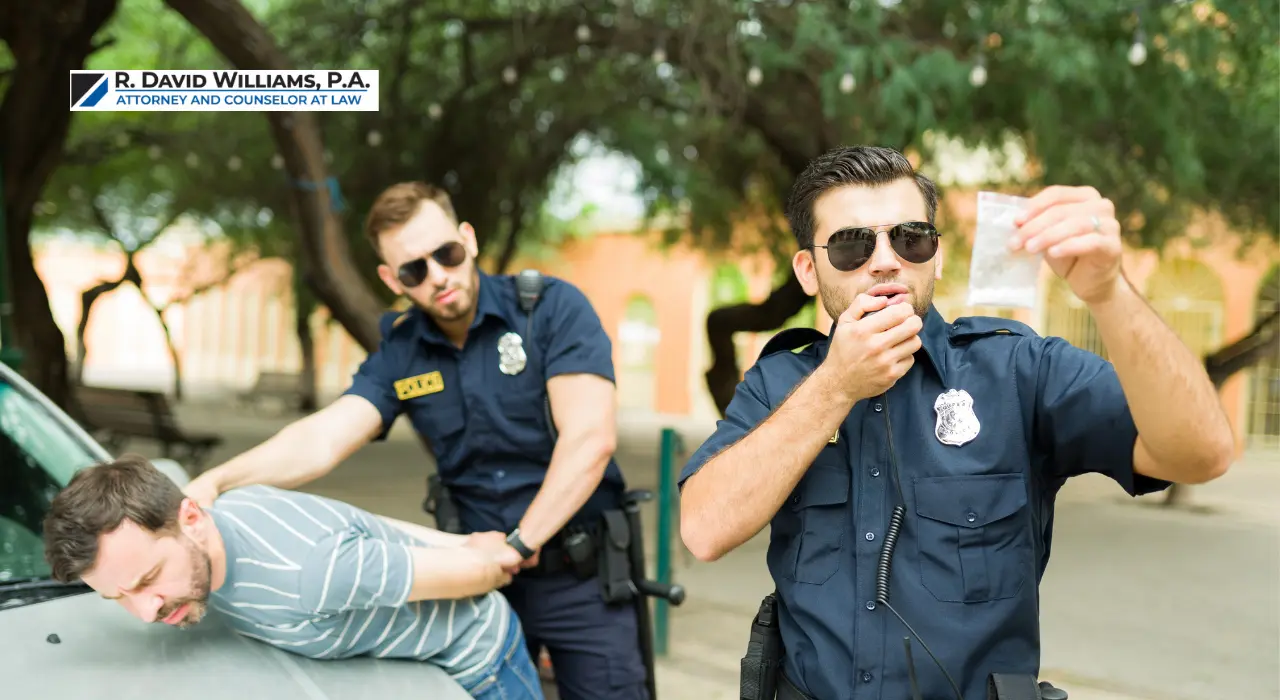
By contrast, possession of other controlled substances is charged as a third degree felony, even when the amount is small. That's why many people are genuinely surprised to learn that a simple drug possession charge can still result in felony charges, not because the amount was large, but because of what the substance was.
Several factors determine whether a drug crime rises to felony level under Florida law. The type of substance is the most important factor. Under Florida Statute § 893.03, Florida divides drugs into schedules based on risk and accepted medical use:
Possession of a controlled substance from any of these schedules without a valid prescription can lead to felony charges under Florida Statute § 893.13.
How the substance was obtained also matters. A medication must be prescribed through a legitimate prescribing practitioner's professional practice for his or her patient. If that connection doesn't exist, possession of even an otherwise legal drug can still be treated as a criminal offense.
Quantity plays a role as well. While small amounts can still trigger felony possession charges, larger amounts may lead to accusations of intent to sell or drug trafficking, which carry far more severe possession penalties.
Here's how charges are typically classified under § 893.13:
This distinction matters because a felony drug conviction carries consequences that extend well past the courtroom.
To secure a drug conviction, the state must prove you possessed the substance. Florida law recognizes two ways to establish that.
Actual possession means the substance was found directly on you, in your hand, your pocket, or otherwise on your person at the time of the arrest.
Constructive possession is more complex. It applies when the drug wasn't on you but was found in a location you controlled, such as your car or home. For the state to prove constructive possession, it must show two things:
Actual and constructive possession cases often come down to who else had access to the space. If multiple people were in the vehicle or the drugs were found in a shared area, proving constructive possession becomes significantly harder for the prosecution. That's one of the first things an experienced criminal defense attorney examines when building a defense.
Florida Statute § 893.13 imposes enhanced drug possession penalties when a drug crime occurs in or near certain protected locations. In some situations, this may lead to enhanced penalties depending on the specific charge and circumstances. If you're charged with possession near any of the following, the case may become more serious:
These location-based factors are more commonly tied to offenses involving sale, manufacture, or delivery, but they can still influence how a case is charged and prosecuted under Florida drug laws.
Drug possession penalties in Florida vary depending on the charge. For a third degree felony, you may face:
Beyond the courtroom, a felony record can affect your ability to find work, secure housing, hold a professional license, or qualify for certain financial aid. A second or subsequent violation can lead to harsher sentencing and fewer alternatives to incarceration.
After an arrest by a local law enforcement officer, the process moves quickly. While every case is different, most follow a similar path through the Broward County court system.
You’re typically booked and brought before a judge for an initial appearance, where conditions of release are set. From there, the prosecutor reviews the case and decides what formal charges to file. This leads to an arraignment, where you enter a plea.
The case then moves into pretrial hearings and negotiations. During this stage, evidence is reviewed, motions may be filed, and potential resolutions are discussed. If the case isn’t resolved, it proceeds to trial.
In some situations, you may be eligible for alternatives such as drug court or substance abuse treatment programs, particularly if the offense is tied to addiction rather than intent to distribute.
Not every drug possession charge results in a conviction. Several defenses may apply depending on the facts of your case.
The strength of any defense depends on the specific facts. Florida drug possession laws leave room for challenge, and the prosecution's case isn't always as solid as it first appears.
Some possession cases escalate quickly. A drug possession charge can escalate to more serious felony charges, including trafficking under Florida Statute § 893.135, when quantities exceed statutory thresholds or when other aggravating factors are present.
This can happen when there is evidence of:
Drug trafficking charges carry mandatory minimum sentences under Florida drug laws and leave far less room for negotiation. If the facts of your case point in that direction, contacting a criminal defense attorney as early as possible is an important step you can take.
Q: Is possession of drugs a felony in Florida?
A: It depends on the substance. Possession of most controlled substances is charged as a third degree felony. Possession of marijuana under 20 grams is typically a first degree misdemeanor.
Q: What is constructive possession?
A: Constructive possession means the drugs weren't found on you but in a location you controlled. The state must prove both knowledge and control.
Q: What's the difference between actual and constructive possession?
A: Actual possession means the substance was on your person. Constructive possession means it was in a place you had access to and control over, like a car or home.
Q: Can a felony drug charge be reduced?
A: In some cases, yes. Eligibility for drug court or a substance abuse treatment program can affect how a drug crime is resolved.
Q: What if I had a prescription?
A: A valid prescription obtained through a legitimate medical provider can be a defense, depending on the facts and whether the prescribing practitioner's professional practice supports it.
Q: What are the possession penalties for a felony?
A: A third degree felony drug conviction can carry up to five years in prison, up to five years of probation, fines up to $5,000, and a permanent record.
Q: Does where I was arrested matter?
A: Yes. Florida law enhances drug possession penalties for offenses occurring near schools, child care facilities, churches, colleges, and other protected locations.
A drug possession arrest puts your record, your freedom, and your future on the line. Whether you're trying to figure out if this is a misdemeanor or a felony possession charge, what the possession penalties could look like, or whether any defenses apply to your situation, you don't have to piece it together alone.
I’m Fort Lauderdale drug possession lawyer David Williams. When you call the Law Offices of R. David Williams, P.A., you speak directly with me. I take the time to review the facts of your drug crime, explain how Florida drug possession laws apply to your specific case, and walk through your options clearly and directly. With 30+ years of criminal defense experience, a background in psychology, 5-star ratings on Google and AVVO, and staff fluent in English and Spanish, my office is equipped to handle your case from every angle. We serve clients throughout Fort Lauderdale, Broward County, Miami-Dade, and Palm Beach County.
Call (954) 522-9997 to schedule your free consultation, or use the confidential online form to reach me directly. Same-day responses are common, and after-hours support is available.
Knowledge | Experience | Integrity – R. David Williams
Copyright © 2026. Law Offices of R. David Williams, P.A. All rights reserved.
The information in this blog post (post) is provided for general informational purposes only and may not reflect the current law in your jurisdiction. No information in this post should be construed as legal advice from the individual author or the law firm, nor is it intended to be a substitute for legal counsel on any subject matter. No reader of this post should act or refrain from acting based on any information included in or accessible through this post without seeking the appropriate legal or other professional advice on the particular facts and circumstances at issue from a lawyer licensed in the recipient’s state, country, or other appropriate licensing jurisdiction.
Law Offices of R. David Williams, P.A.
15 Southwest 10th Street
Fort Lauderdale, FL 33315
(954) 522-9997
https://dwilliamslaw.com/
Call (954) 522-9997 or fill out the short form below. We will usually respond within 1 business day but often do so the same day. Don’t hesitate, your questions are welcome.
* Required Fields
After-hours support is Now Available!
We are thrilled to introduce our after-hours answering service, which ensures prompt response to all of your queries regardless of the time. Our dedication to your satisfaction extends beyond regular business hours. Please feel free to contact us anytime; we will be more than happy to assist you.


The information you obtain at this site is not, nor is it intended to be, legal advice. You should consult an attorney for advice regarding your individual situation. Contacting us does not create an attorney-client relationship.


