The Fourth Amendment of the United States Constitution and Article I, Section 12 of the Florida Constitution provide a fundamental shield for every individual: the right to be secure in their persons, houses, papers, and effects against unreasonable searches and seizures. In the active legal climate of Fort Lauderdale, understanding where law enforcement’s authority ends and your privacy begins is essential for protecting your future.
What many residents of Broward County do not realize is that the line between a lawful investigation and an Illegal Search and Seizure in Florida is often razor-thin. When police overstep these constitutional boundaries, the evidence they collect, whether it be physical items, digital data, or verbal statements, may be barred from use in the 17th Judicial Circuit Court. This guide explores the legal standards for searches, the common ways rights are violated, and how a knowledgeable defense can challenge unlawful police conduct. Contact the Law Offices of R. David Williams, P.A. to discuss your case and protect your future.
Protecting your constitutional rights in the 17th Judicial Circuit requires a clear understanding of police boundaries. Here are the essential takeaways regarding an Illegal Search and Seizure in Florida:
To understand what makes a search "illegal," one must first understand the legal justifications required for police to interfere with your privacy. In Florida, law enforcement typically operates under two different standards depending on the level of intrusion.
Under the landmark ruling in Terry v. Ohio, an officer can briefly detain you if they have "reasonable suspicion" that a crime has been, is being, or is about to be committed. This is more than a mere hunch but less than proof of a crime.
An Illegal Search and Seizure in Florida often occurs when an officer performs a full search without "probable cause." This requires a fair probability that a crime has occurred or that evidence of a crime will be found in a specific location.
Police encounters in South Florida frequently lead to Fourth Amendment challenges. Our firm has reviewed countless cases where the Broward State Attorney’s Office relied on evidence that was collected through questionable means.
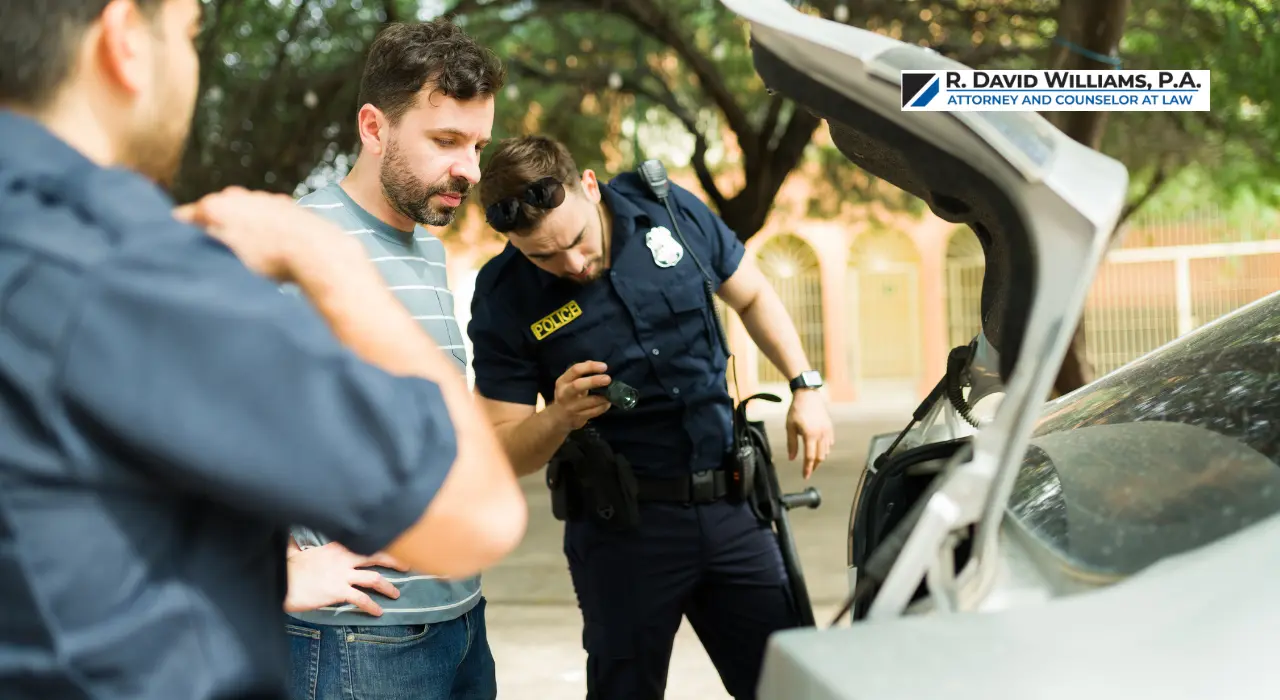
The "Motor Vehicle Exception" allows police to search a car without a warrant if they have probable cause to believe it contains contraband. However, the search becomes illegal if:
Your home is the most protected area under both federal and state law. Except for rare emergencies or valid consent, police must have a warrant to enter. Violations often occur when officers enter the "curtilage" (the area immediately surrounding the home, like a fenced yard or porch) without a legal basis.
Following the U.S. Supreme Court's ruling in Riley v. California, police generally cannot search the digital contents of a smartphone after an arrest in Fort Lauderdale without a separate search warrant. Even if you are in custody, your digital life remains private unless the state can prove an immediate need to prevent the destruction of evidence or a threat to public safety.
When a judge in the 17th Judicial Circuit determines that an Illegal Search and Seizure in Florida occurred, the primary remedy is the Exclusionary Rule.
For many defendants, a successful Motion to Suppress is the turning point in their case. If the excluded evidence was the cornerstone of the prosecution's allegations, the state may be forced to reduce or even dismiss the charges entirely.
If you believe you were the victim of an unlawful search, the actions you take immediately following the incident are vital.
Our firm focuses on identifying police misconduct and protecting your rights under the law. We have represented hundreds of clients in Fort Lauderdale, working to ensure that the government meets its high burden of proof without cutting constitutional corners.
As of 2026, the legal landscape surrounding the smell of marijuana has shifted significantly due to the legalization of medical marijuana and the prevalence of hemp. While a judge may still consider the "plain smell" of marijuana as part of the "totality of circumstances" for probable cause, it is no longer an automatic justification for a warrantless search in every scenario. A knowledgeable attorney will examine whether the officer had a valid basis for the search, given the current state of Florida law.
You have the right to politely but clearly refuse. You can say: "I do not consent to any searches." Refusing a search does not give the officer probable cause to search you, nor does it make you "look guilty" in the eyes of the law. If they search anyway, your refusal is a critical piece of evidence that a seasoned legal advocate can use to challenge the search in the 17th Judicial Circuit Court.
Under Florida Statute § 933.05, a search warrant must describe with "particularity" the place to be searched and the items to be seized. If a warrant is overly broad, for example, authorizing a search of an entire apartment complex when only one unit was under suspicion, it may be deemed invalid. Errors in the address, the description of the property, or the expiration of the warrant: typically 10 days for physical property, though up to 365 days for certain electronic devices, can all be grounds for a Motion to Suppress.
If a law enforcement officer intentionally or recklessly included false information in the affidavit for a warrant, your attorney can request a Franks Hearing. During this hearing, the defense challenges the truthfulness of the officer’s statements. If the judge finds the officer was dishonest and that the warrant would not have been issued without those lies, any evidence found during the search will likely be suppressed.
Florida generally follows the "knock and announce" rule, which requires police to identify themselves and wait a reasonable amount of time before entering. However, "no-knock" entries may be authorized if there is a specific, articulable fear that evidence will be destroyed or that officers will be in immediate danger. If police used a no-knock entry without a specific judicial authorization or emergency, a skilled attorney may challenge the entry as an Illegal Search and Seizure in Florida.
An illegal search and seizure can significantly affect a criminal case, but a disputed search does not automatically mean the evidence would be excluded. The court must review the circumstances, including whether law enforcement had a valid warrant, probable cause, reasonable suspicion, consent, or another recognized exception to the warrant requirement.
If you believe officers searched your home, vehicle, phone, or belongings unlawfully, protect yourself before making additional statements. You have the right to remain silent, the right to legal counsel, and the right to challenge evidence gathered in violation of your constitutional protections. Avoid discussing the incident with law enforcement or witnesses until an attorney has reviewed the search, the police reports, and any available body camera, dashcam, or surveillance footage.
I’m Fort Lauderdale criminal defense attorney R. David Williams. When you call the Law Offices of R. David Williams, P.A., you speak directly with me. I take the time to review the facts of your case, examine the evidence, explain how Florida’s aggravated battery laws may apply, and walk through your defense options clearly and directly.
Call (954) 522-9997 to schedule your free consultation, or use the confidential online form to reach me directly. Same-day responses are common, and after-hours support is available.
Knowledge | Experience | Integrity – R. David Williams
Copyright © 2026. Law Offices of R. David Williams, P.A. All rights reserved.
The information in this blog post (post) is provided for general informational purposes only and may not reflect the current law in your jurisdiction. No information in this post should be construed as legal advice from the individual author or the law firm, nor is it intended to be a substitute for legal counsel on any subject matter. No reader of this post should act or refrain from acting based on any information included in or accessible through this post without seeking the appropriate legal or other professional advice on the particular facts and circumstances at issue from a lawyer licensed in the recipient’s state, country, or other appropriate licensing jurisdiction.
Law Offices of R. David Williams, P.A.
15 Southwest 10th Street
Fort Lauderdale, FL 33315
(954) 522-9997
https://dwilliamslaw.com/
Call (954) 522-9997 or fill out the short form below. We will usually respond within 1 business day but often do so the same day. Don’t hesitate, your questions are welcome.
* Required Fields
After-hours support is Now Available!
We are thrilled to introduce our after-hours answering service, which ensures prompt response to all of your queries regardless of the time. Our dedication to your satisfaction extends beyond regular business hours. Please feel free to contact us anytime; we will be more than happy to assist you.


The information you obtain at this site is not, nor is it intended to be, legal advice. You should consult an attorney for advice regarding your individual situation. Contacting us does not create an attorney-client relationship.


