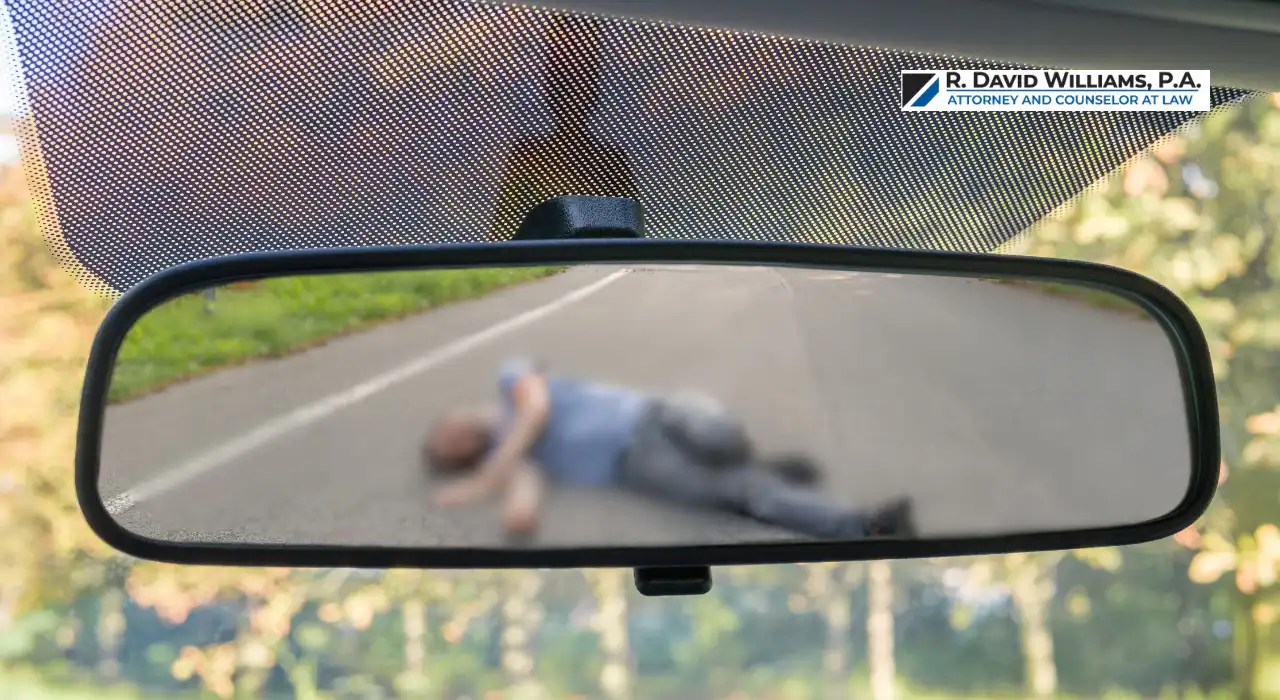
A moment of panic after a crash can have consequences that last for years. Whether someone leaves because they're frightened, confused, or believe the damage is minor, Florida law imposes strict duties on a driver involved in a motor vehicle crash. Failing to meet those duties can lead to serious criminal charges, particularly when someone has suffered injury or death.
So, is leaving the scene of an accident a felony in Florida?
Sometimes. The answer depends largely on what happened during the crash. If the accident resulted in only property damage, the offense is generally charged as a misdemeanor. However, if someone was injured or killed, leaving the scene may lead to felony charges carrying lengthy prison time, mandatory driver's license revocation, and a permanent criminal record.
Knowing when a hit and run becomes a felony, the duties Florida hit-and-run law places on every driver, and the penalties that may apply can help you make informed decisions if you're facing an investigation or criminal charges.
Although many people assume each hit and run is automatically a felony, leaving the scene of an accident in Florida carries different charges depending on what occurred during the crash.
For example:
Because prosecutors evaluate the specific facts of each case, the same decision to leave the scene can lead to very different charges depending on the circumstances.
A driver involved in a crash has legal responsibilities, regardless of who caused the accident. Under Fla. Stat. § 316.062, a driver generally must:
These statutory duties apply whether the crash occurred on public or private property, although the specific facts of the incident may affect how the law is applied.
Simply leaving because you believe the damage is minor or because you think the other party isn't hurt can still lead to criminal charges if the law required you to remain.
The severity of the charge depends primarily on what happened during the crash.
If the accident causes only property damage, leaving the scene is generally charged as a second-degree misdemeanor under Fla. Stat. § 316.061.
Examples may include damage to:
Although misdemeanor cases carry less severe penalties than felony offenses, a conviction can still lead to fines, probation, and possible jail time.
The situation changes when someone has suffered injuries. If a driver fails to stop after a crash that causes bodily injury, prosecutors may pursue a third-degree felony under Fla. Stat. § 316.027(2)(a).
Depending on the circumstances, a conviction may expose the defendant to:
If the injuries rise to the level of serious bodily injury, the charge escalates to a second-degree felony under Fla. Stat. § 316.027(2)(b).
Hit-and-run cases involving death carry the harshest consequences under Florida law. When a driver left the scene of the crash after a fatal collision, prosecutors may seek first-degree felony charges under Fla. Stat. § 316.027(2)(c). These offenses carry some of the harshest penalties available for leaving the scene of an accident, including lengthy prison sentences and, in certain circumstances, a mandatory minimum term of imprisonment.
Because hit-and-run fatalities involve complex legal and factual issues, these cases often require an extensive investigation by law enforcement before formal charges are filed.
As with any criminal offense, the prosecution must prove each required element beyond a reasonable doubt.
Depending on the facts, prosecutors generally must establish that:
Whether the prosecution can prove each element depends on the evidence gathered during the investigation, including witness testimony, surveillance footage, vehicle damage, accident reconstruction, and statements made after the accident.
The penalties for a hit-and-run conviction depend on whether the crash involved property damage, injury, serious bodily injury, or death.
While each case is different, Florida courts may impose:
In some felony hit-and-run cases, Florida law also imposes mandatory minimum prison sentences. Under Fla. Stat. § 316.027(2)(c), a driver convicted of leaving the scene of a fatal crash faces a mandatory minimum term of four years in state prison. Depending on the circumstances, the driver convicted of leaving the scene of an accident may also be required to complete a department-approved driver improvement course or attend a victim's impact panel session as part of the sentence or driver's license reinstatement requirements.
Because the penalties increase when the crash involves injury or death, you need to know the specific charge you're facing.
Many drivers believe the law only applies to crashes that occur on public roads. That's not necessarily true. Certain duties under Florida law may also apply when a crash occurs on private property, depending on the circumstances and the applicable statute.
For example, striking another parked vehicle, a fence, or other property in a shopping center parking lot doesn't automatically eliminate your legal responsibilities. You may still have a duty to stop, identify yourself, and notify the appropriate property owner or law enforcement when required.
Because the facts surrounding each accident can vary, it's important not to assume that leaving a parking lot collision carries no legal consequences.
Each case depends on its own facts, and prosecutors still bear the burden of proving the charge beyond a reasonable doubt.
Depending on the circumstances, possible defenses may include:
The availability of any defense depends entirely on the facts of the case, the evidence collected during the investigation, and the applicable Florida statutes.
If you believe law enforcement is investigating you for leaving the scene of a crash, taking prompt action can help protect your legal rights.
Consider the following steps:
Every investigation is different, and getting legal guidance early puts you in a better position to understand the allegations and the potential consequences before charges are formally filed.
Being accused of leaving the scene of an accident can have serious consequences that extend well beyond the immediate criminal case. A conviction may affect your freedom, your driver's license, your employment opportunities, and your future.
If you're under investigation or have already been charged with a hit and run, speaking with an attorney as early as possible allows you to better understand the charges, evaluate the available evidence, and begin preparing your defense before important decisions are made.
A hit and run involving only property damage is generally charged as a misdemeanor, while crashes involving injury or death may lead to felony charges.
In many situations, leaving the scene of an accident involving only property damage is charged as a second-degree misdemeanor, although penalties can still include fines, probation, and possible jail time.
Possibly. Prosecutors generally must prove the defendant knew, or reasonably should have known, that a crash occurred. Whether that requirement can be satisfied depends on the facts and evidence in the case.
Florida law generally requires a driver to remain at the scene, provide identifying information, and render reasonable assistance to any injured person until emergency responders arrive or other legal obligations have been satisfied.
If you're under investigation or have been charged with leaving the scene of an accident, speaking with an attorney as soon as possible puts you in a stronger position to understand the allegations and your legal options.
A hit-and-run investigation can move quickly, and what you do in the hours and days afterward may affect how your case develops. Whether the allegations involve property damage, bodily injury, or death, understanding your rights and responding carefully can make a meaningful difference.
I'm Fort Lauderdale hit-and-run lawyer R. David Williams, and for more than 30 years, I've defended individuals facing serious criminal charges throughout Fort Lauderdale, Broward County, Miami-Dade, and Palm Beach County. If you're accused of leaving the scene of an accident, I'll review the evidence, explain the charges you're facing, and build a defense based on the facts of your case. When you call the Law Offices of R. David Williams, P.A., you'll speak with me directly.
With a background in psychology, 5-star ratings on Google and AVVO, and staff fluent in English and Spanish, my office is equipped to handle your case from every angle. We serve clients throughout Fort Lauderdale, Broward County, Miami-Dade, and Palm Beach County.
Call (954) 522-9997 to schedule your free consultation, or use the confidential online form to reach me directly. Same-day responses are common, and after-hours support is available.
Knowledge | Experience | Integrity – R. David Williams
Copyright © 2026. Law Offices of R. David Williams, P.A. All rights reserved.
The information in this blog post (post) is provided for general informational purposes only and may not reflect the current law in your jurisdiction. No information in this post should be construed as legal advice from the individual author or the law firm, nor is it intended to be a substitute for legal counsel on any subject matter. No reader of this post should act or refrain from acting based on any information included in or accessible through this post without seeking the appropriate legal or other professional advice on the particular facts and circumstances at issue from a lawyer licensed in the recipient’s state, country, or other appropriate licensing jurisdiction.
Law Offices of R. David Williams, P.A.
15 Southwest 10th Street
Fort Lauderdale, FL 33315
(954) 522-9997
https://dwilliamslaw.com/
Call (954) 522-9997 or fill out the short form below. We will usually respond within 1 business day but often do so the same day. Don’t hesitate, your questions are welcome.
* Required Fields
After-hours support is Now Available!
We are thrilled to introduce our after-hours answering service, which ensures prompt response to all of your queries regardless of the time. Our dedication to your satisfaction extends beyond regular business hours. Please feel free to contact us anytime; we will be more than happy to assist you.


The information you obtain at this site is not, nor is it intended to be, legal advice. You should consult an attorney for advice regarding your individual situation. Contacting us does not create an attorney-client relationship.


