
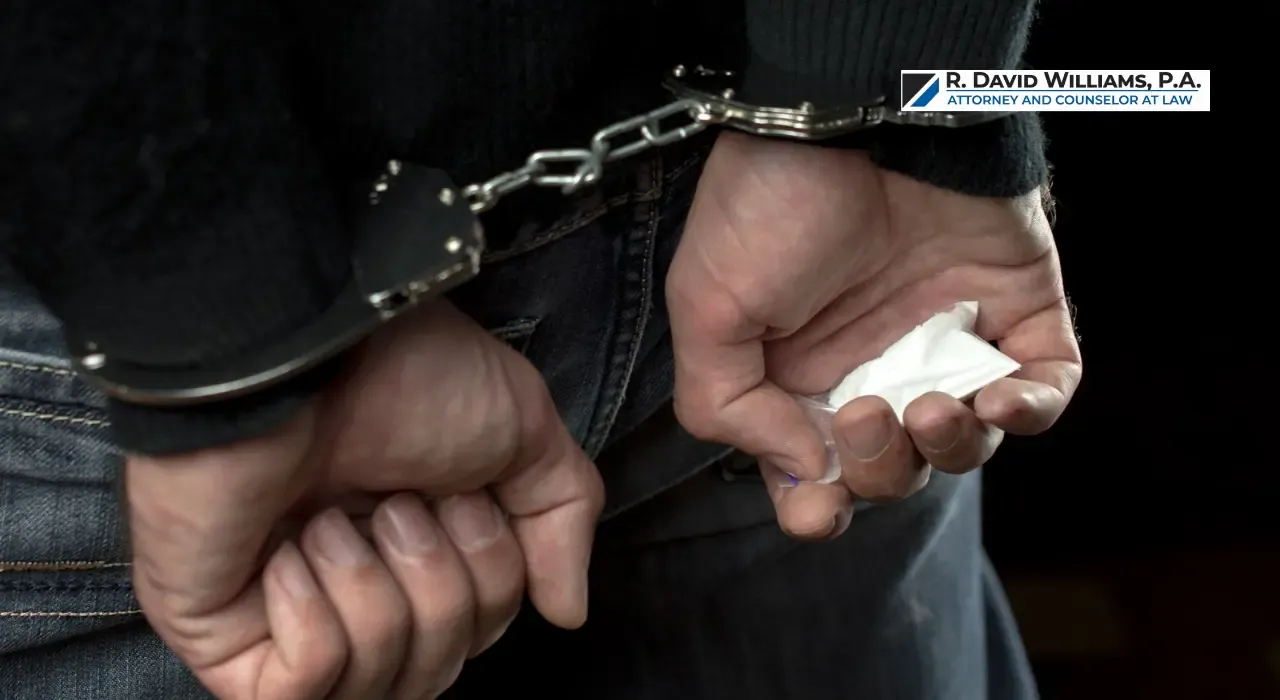
The night of your arrest probably keeps replaying in your head: flashing lights, an officer's questions, a small bag pulled from a console or pocket. Now a court date is coming, and you're wondering whether this will cost you your job, your license, or your freedom.
If you're searching for how to beat a drug possession charge, you have options worth examining before you decide what to do next. Prosecutors must prove every element with lawfully obtained evidence, and when they can't, the prosecution can fall apart. For people who did possess drugs and want a fresh start, Broward County offers diversion programs that can lead to dismissal instead of a conviction.
Key Highlights
- "Beating" a drug charge never means lying; it means holding the State to its burden of proof.
- Florida prosecutors must prove you knew the drugs were there and could control them, and that the substance really is a controlled substance.
- Evidence from an illegal search can be thrown out.
- Eligible defendants may qualify for pretrial intervention or drug court, and successful completion can end with the charges dismissed.
- A plea with a withhold of adjudication can keep you from a formal conviction and may allow sealing later.
What Does "Beating" a Drug Possession Charge Actually Mean?
Beating a drug possession charge means walking away without a criminal conviction through a lawful process. It never means lying to the court or blaming someone else. You're presumed innocent under Florida law, and making the prosecution meet its burden of proof is how the system is designed to work, whether or not the drugs were yours. If they were yours, treatment-based programs exist for people who want help instead of a record.
A defense lawyer's job is to look at the particular evidence in your case and tell you which path fits your situation:
| Your Situation | Path to Explore | Where It Can Lead |
|---|---|---|
| "The drugs weren't mine." | Challenge knowledge and control | Dropped charges or a not guilty verdict |
| "They searched without a good reason." | Motion to suppress evidence | Excluded evidence, possible dismissal |
| "I had a prescription." | Prescription defense | Possible dismissal |
| "They were mine, and I want a second chance." | PTI or drug court | Dismissal after completion |
| "I want this off my record." | Withhold of adjudication, then sealing | No formal conviction; possible sealing |
Each of these paths starts with the same question: what do prosecutors have to prove?
What Must Prosecutors Prove Before You Can Be Convicted?
To convict you of simple possession, prosecutors must prove beyond a reasonable doubt that you knowingly possessed a controlled substance. That means showing you knew the drugs were there and could control them, whether they were on you or somewhere you had control over. Prosecutors don't have to prove you knew the substance was illegal, but not knowing can be a separate defense, which we cover below.
Possessing a controlled substance without a valid prescription is a third-degree felony under Fla. Stat. § 893.13, carrying up to five years in prison. There are exceptions on both ends: possession of 20 grams or less of cannabis is a first-degree misdemeanor, while possession of more than 10 grams of certain drugs, such as heroin or fentanyl, is a first-degree felony.
If prosecutors claim you intended to sell drugs like cocaine or heroin, the charge can jump to a second-degree felony. Whether drug possession is a felony in Fort Lauderdale depends on the substance involved, the amount, and the circumstances of the alleged offense.
Actual Possession vs. Constructive Possession
Actual possession means the drugs were on you. Constructive possession means they were somewhere near you, like a car console or a shared bedroom, and prosecutors say you knew about them and could control them. That second category gives defense strategies room to work.
When several people share a car or apartment, being close to drugs isn't enough on its own; the State needs additional evidence connecting you to the drugs, like fingerprints or your own statements. If you were a passenger in someone else's car, our blog on whether drugs found in a car can be charged to everyone inside explains how constructive possession applies to each person in the vehicle.
Proof That the Substance Is Illegal
Prosecutors rely on crime lab testing to prove the substance is illegal, and an officer's opinion or a roadside field test is open to challenge. Cannabis cases need a close look, because Florida law treats hemp differently from marijuana.
The Florida Department of Law Enforcement explains that its labs use instrument testing to tell legal hemp apart from illegal cannabis. Lab reports, testing methods, and the chain of custody from the scene to the lab can all be questioned through discovery and pretrial motions.
Knowledge of What the Substance Was
Sometimes a person is holding something without any idea it's a drug, like a package a friend asked them to carry. Under Fla. Stat. § 893.101, not knowing the illegal nature of the substance is an affirmative defense.
There's a catch: if you raise this defense, jurors may presume you knew what the substance was because you possessed it. They're free to reject that presumption, but the defense depends on believable facts and witnesses.
Even when the State can prove possession on paper, how officers got the evidence can change everything.
Can Your Lawyer Suppress Evidence From an Illegal Search?
Yes. If police found the drugs through an unlawful search, your lawyer can file a motion to suppress evidence. If the trial court grants it, prosecutors can't use the suppressed evidence in their case against you, and what happens next depends on what other evidence they have left. The Fourth Amendment protects you from unreasonable searches and seizures, and a motion to suppress evidence is the tool that enforces that protection.
Traffic Stops in Fort Lauderdale
If your case started with a traffic stop, the stop is the first thing to examine. To pull you over, an officer needs at least reasonable suspicion that you committed a crime or a traffic violation. If the stop was unlawful, or officers held you longer than the stop's purpose required without new reasonable suspicion, everything found afterward can be challenged.
Searches of Your Car, Bag, or Home
Without a warrant or your consent, police need probable cause to search your car, unless a narrow exception applies, such as a search after a lawful arrest. Officers need a warrant or your consent to enter your home, except in limited emergencies.
If you said yes to a search, prosecutors will argue it was legal. Whether your consent was truly voluntary is a question your lawyer can test at a suppression hearing.
What Happens When Evidence Is Suppressed
When the drugs themselves are suppressed, prosecutors may have nothing left to prove possession. The State Attorney's Office can then drop the charges, or the court can dismiss them. That's why suppression motions are one of the first things an experienced criminal defense lawyer looks at, comparing body camera footage, dispatch records, and the officer's report for gaps.
What If You Had a Prescription for the Pills?
A valid prescription is a defense to possessing that medication. Florida law makes possession a crime only when the controlled substance wasn't lawfully obtained from a practitioner or through a valid prescription.
These charges come up when someone carries their own pills in a weekly organizer or a plain bag, and pharmacy records can help resolve the case. The defense doesn't cover pills prescribed to someone else, even a spouse or parent.
What If the Drugs Were Yours and You Want a Second Chance?
If the drugs were yours, you may still be able to avoid a criminal conviction through a diversion program like the PTI program or drug court. These programs are an honest path for people ready to take responsibility. They're built on a simple idea: for someone struggling with substance use, treatment can do more good than jail time.
How the PTI Program Works in Florida
Under Fla. Stat. § 948.08, pretrial intervention is open to two groups charged with a misdemeanor or a third-degree felony: first-time offenders, and people with no more than one prior nonviolent misdemeanor. Admission requires approval from the program administrator, the state attorney, and the judge, along with the victim's consent if there is a victim. The Broward State Attorney's Office also follows its own PTI guidelines, and not every third-degree felony qualifies. You also give up your right to a speedy trial while you're in the program.
Program conditions can include treatment programs, counseling, random drug tests, community service, and regular check-ins. How long it lasts depends on the program and your progress.
Drug Court in Broward County
Broward County's drug court, created in 1991, is one of the oldest in the country. Florida law allows defendants charged with a nonviolent felony to enter a pretrial drug court program if they meet these requirements:
- They have a substance abuse problem and are open to treatment
- They aren't also charged with a violent crime
- They have no more than two prior felony convictions, all nonviolent
Meeting these requirements doesn't automatically get you in, though. If you have prior felony convictions, the judge can still say no.
And if prosecutors prove at a hearing that you were involved in dealing or selling drugs, the judge must deny admission. Drug court also involves close supervision, and a judge can impose sanctions if you miss treatment or test positive.
What Completing a Diversion Program Means for Your Record
In drug court, a judge's finding of successful completion requires dismissal of the charges. In standard PTI, the program administrator can recommend dismissal, and the state attorney makes the final call. Once charges are dismissed, you may be eligible to have your arrest record expunged, so the arrest doesn't follow you into job and apartment applications. If diversion isn't an option, a negotiated plea is another route to protect your record.
Can a Plea Bargain Keep a Conviction Off Your Record?
A negotiated plea won't erase the case, but it can keep a formal conviction off your record. Prosecutors sometimes agree to:
- Reduce a felony to a misdemeanor
- Recommend probation instead of jail time
- Ask for a withhold of adjudication, where the judge accepts your plea and places you on probation without formally adjudicating you guilty
For a third-degree felony, Florida law blocks a withhold if you have two prior felony withholds from other cases. With one prior felony withhold, the judge needs written findings or a written request from the state attorney's office.
A withhold of adjudication also opens the door to sealing. Under Fla. Stat. § 943.059, you may be able to petition to seal your record once you've finished probation. Among other requirements, you can't have been adjudicated guilty of a crime in Florida or have sealed or expunged a record before. You'll also need a certificate of eligibility from the Florida Department of Law Enforcement, and the judge decides whether to grant the petition.
| How the Case Ends | Formal Conviction? | Record Relief |
| Dismissed or dropped charges | No | Expunction may be available |
| Diversion completed | No | Expunction may be available |
| Plea with a withhold | No formal adjudication | Sealing may be available |
| Plea with adjudication of guilt | Yes | Not available, with rare exceptions |
Before you plead guilty or no contest, weigh the consequences outside the courtroom. If you're 18 or older, a possession conviction triggers a driver's license suspension. It lasts 6 months, or until you're evaluated and complete any treatment the evaluator requires.
A judge can allow a license restricted to business or employment purposes when there's a compelling reason. Federal law can also count a plea plus probation as a conviction for immigration purposes, even with a withhold. Non-citizens need careful legal advice before entering any plea.
Frequently Asked Questions
If the Police Didn't Read My Miranda Rights, Will My Case Be Dismissed?
Not automatically. Miranda rights apply when police question you while you're in custody. If they skipped the warning, your statements may be suppressed, but the drugs themselves can still be used unless the search was also unlawful.
Can I Get My Drug Charges Dropped Before Trial?
Yes. Prosecutors may drop charges after a judge suppresses evidence, after lab results come back inconclusive, or after you complete a diversion program.
Should I Just Plead Guilty to Get It Over With?
It's understandable to want this behind you, but a quick plea can leave you with a conviction you didn't need. Have a lawyer check the search, the lab work, and your diversion options first.
Will a Drug Arrest Show Up on Background Checks?
It can. A dismissal doesn't erase the arrest, and landlords and employers can see public arrest records. Expunging or sealing the record is what limits who can see it.
How Can a Fort Lauderdale Drug Possession Lawyer Help You Find the Right Path Forward?
Criminal charges for drug possession can put your job, your driver's license, and your future applications at risk. You need someone who will look at the whole picture, from the search to what you want your life to look like after this.
I'm Fort Lauderdale drug possession lawyer R. David Williams. At my law firm, the Law Offices of R. David Williams, P.A., you speak directly with me, so you won't have to repeat your story to someone new each time. With more than 30 years defending people in Broward, Miami-Dade, and Palm Beach courts, I know how to examine the evidence from a search and how local diversion programs work. My background in psychology helps me provide legal representation that listens without judgment, including when substance use is part of the story. My office also offers help in Spanish.
Call (954) 522-9997 to schedule your FREE consultation, or complete our confidential online form to discuss your situation. Same-day responses are common, and after-hours support is available.
Knowledge | Experience | Integrity – R. David Williams
Copyright © 2026. Law Offices of R. David Williams, P.A. All rights reserved.
The information in this blog post (“post”) is provided for general informational purposes only and may not reflect the current law in your jurisdiction. No information in this post should be construed as legal advice from the individual author or the law firm, nor is it intended to be a substitute for legal counsel on any subject matter. No reader of this post should act or refrain from acting based on any information included in or accessible through this post without seeking the appropriate legal or other professional advice on the particular facts and circumstances at issue from a lawyer licensed in the recipient’s state, country, or other appropriate licensing jurisdiction.
Law Offices of R. David Williams, P.A.
15 Southwest 10th Street
Fort Lauderdale, FL 33315
(954) 522-9997